





The Bureau of Osseous Investigation
Charlie Mai
(b. 1995)
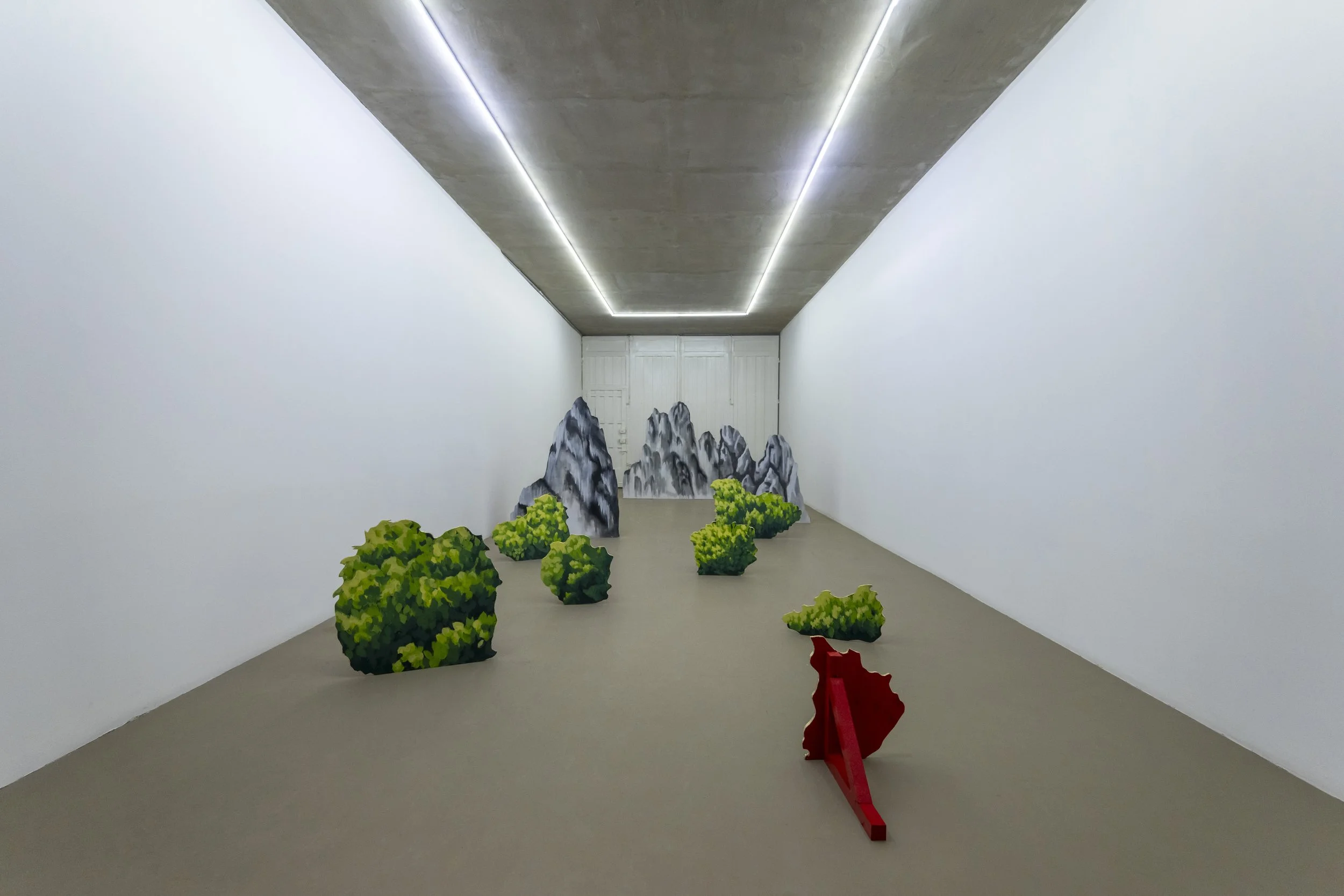
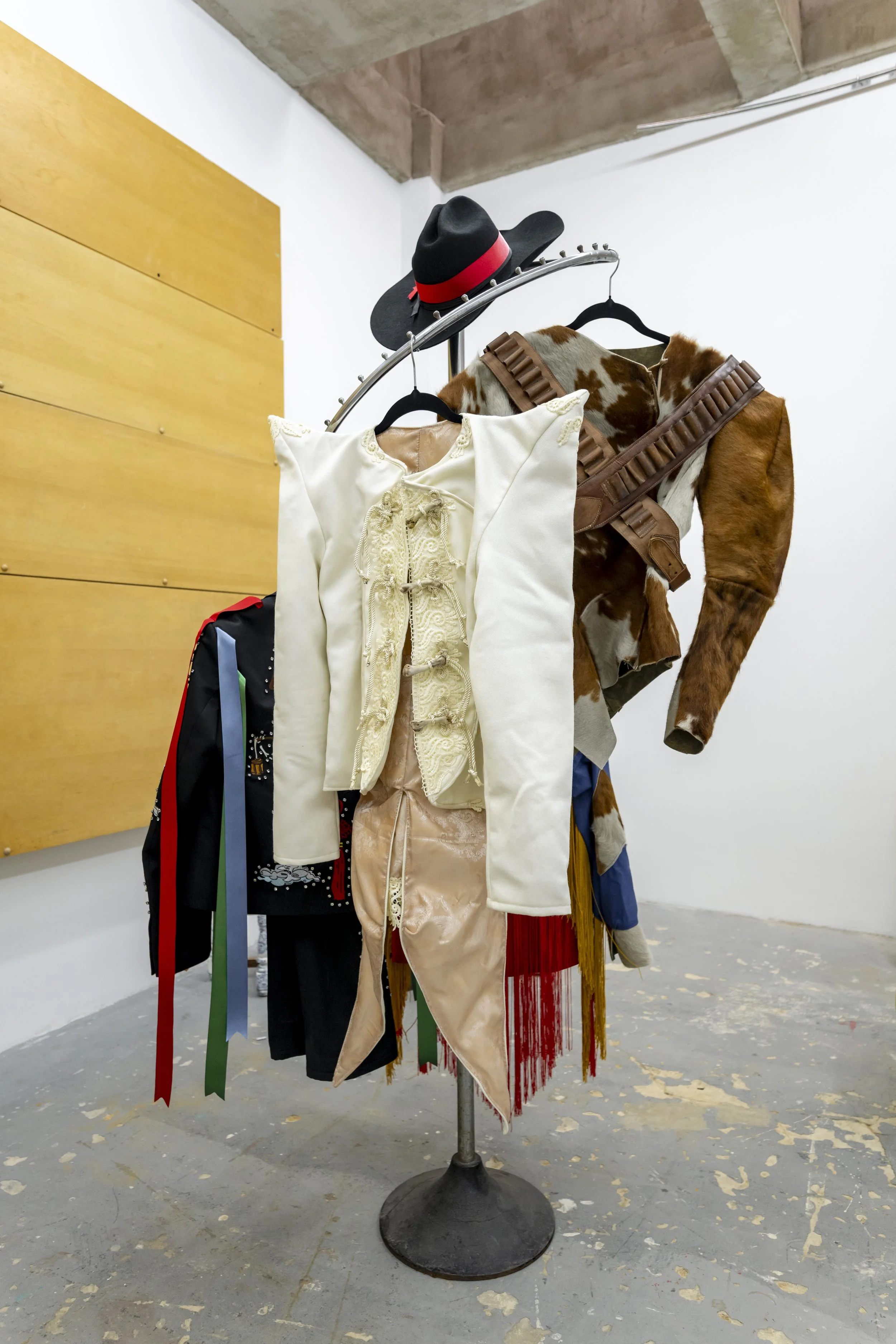
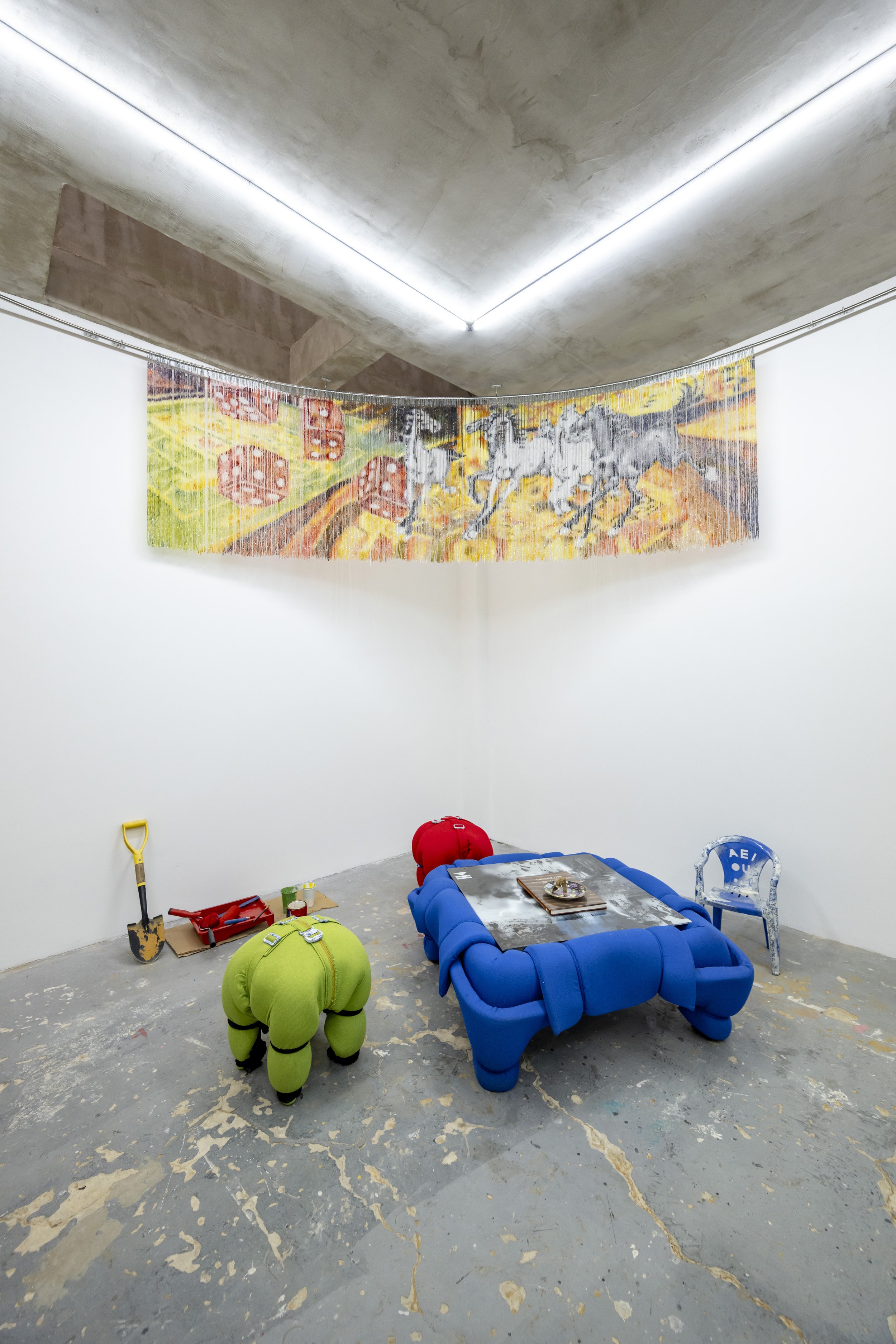
The Bureau of Osseous Investigation se estructura en dos partes: “El Escenario” y “El Crimen”. En conjunto, ambas examinan El Western no solo como un género cinematográfico, sino como una tecnología narrativa fundamental para la ejecución de la expansión territorial de los Estados Unidos.
“El Escenario” investiga la producción del mito estadounidense del Oeste como una forma de ensayo para la conquista. Desde la formulación del Manifest Destiny a mediados del siglo XIX, la expansión estadounidense ha dependido de dispositivos narrativos y escénicos que naturalizan la dominación territorial y la violencia. El Western condensa esta lógica en dramatizaciones heroicas, en el que los espacios se vuelven transitorios y todo territorio es concebido como frontera.
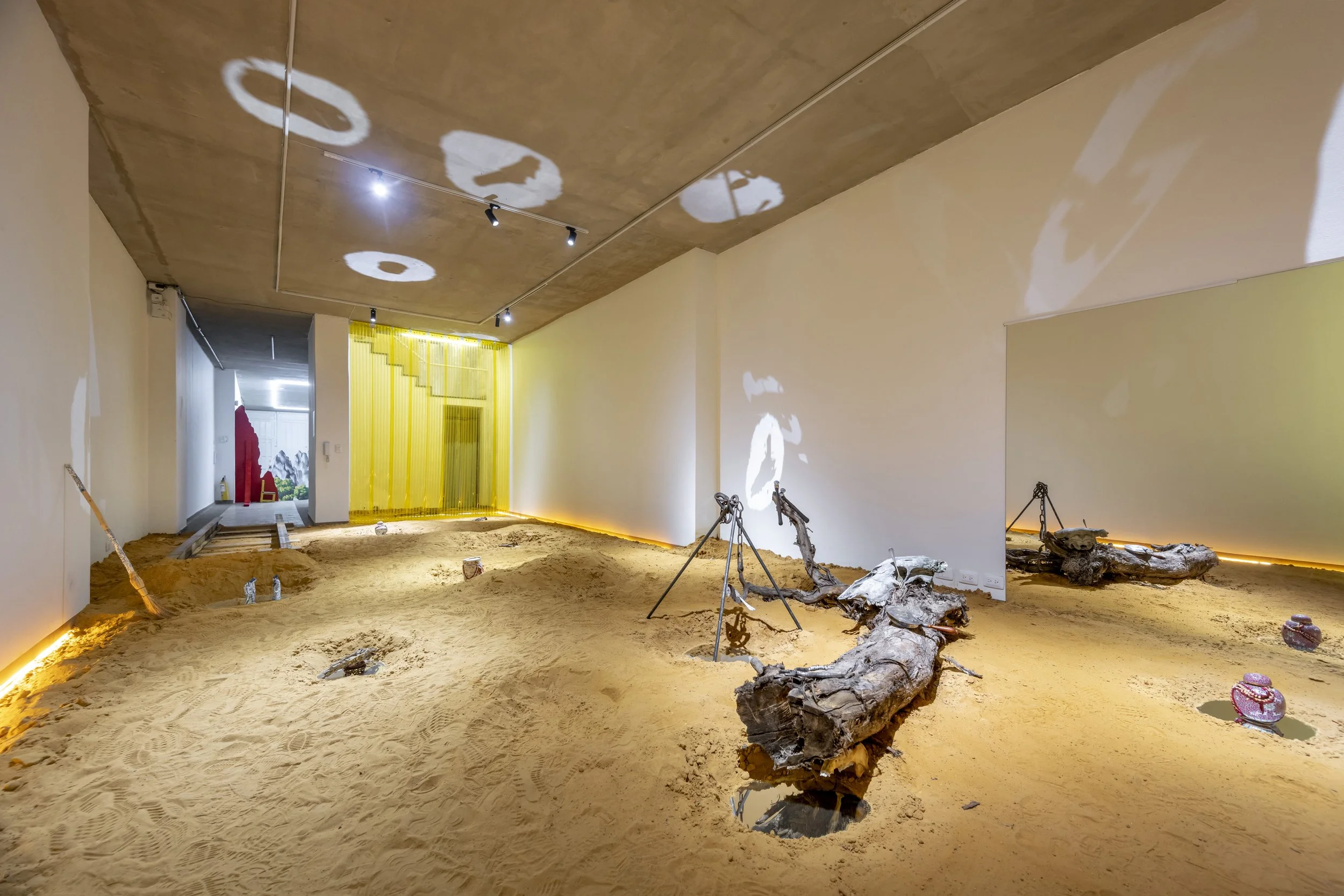
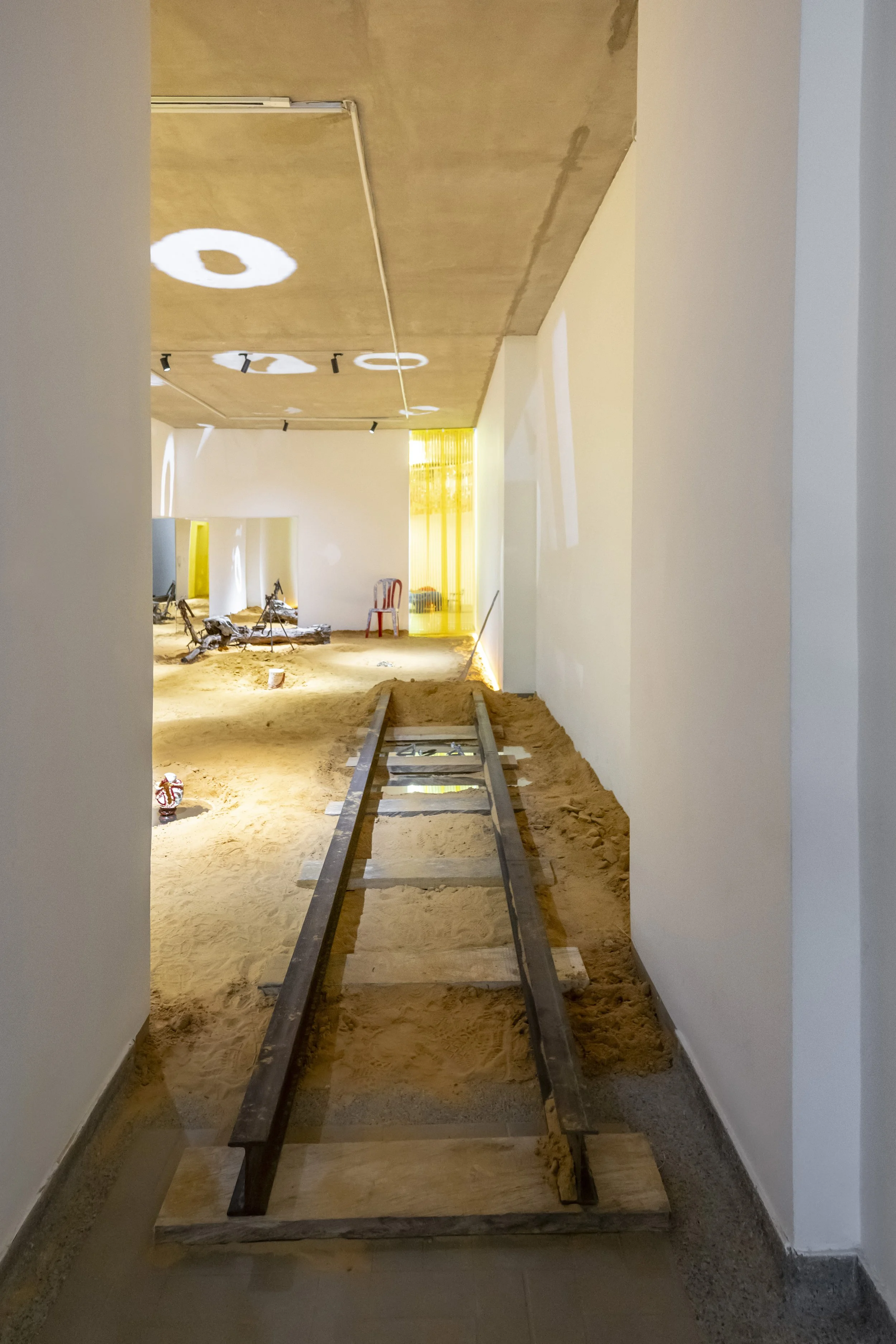
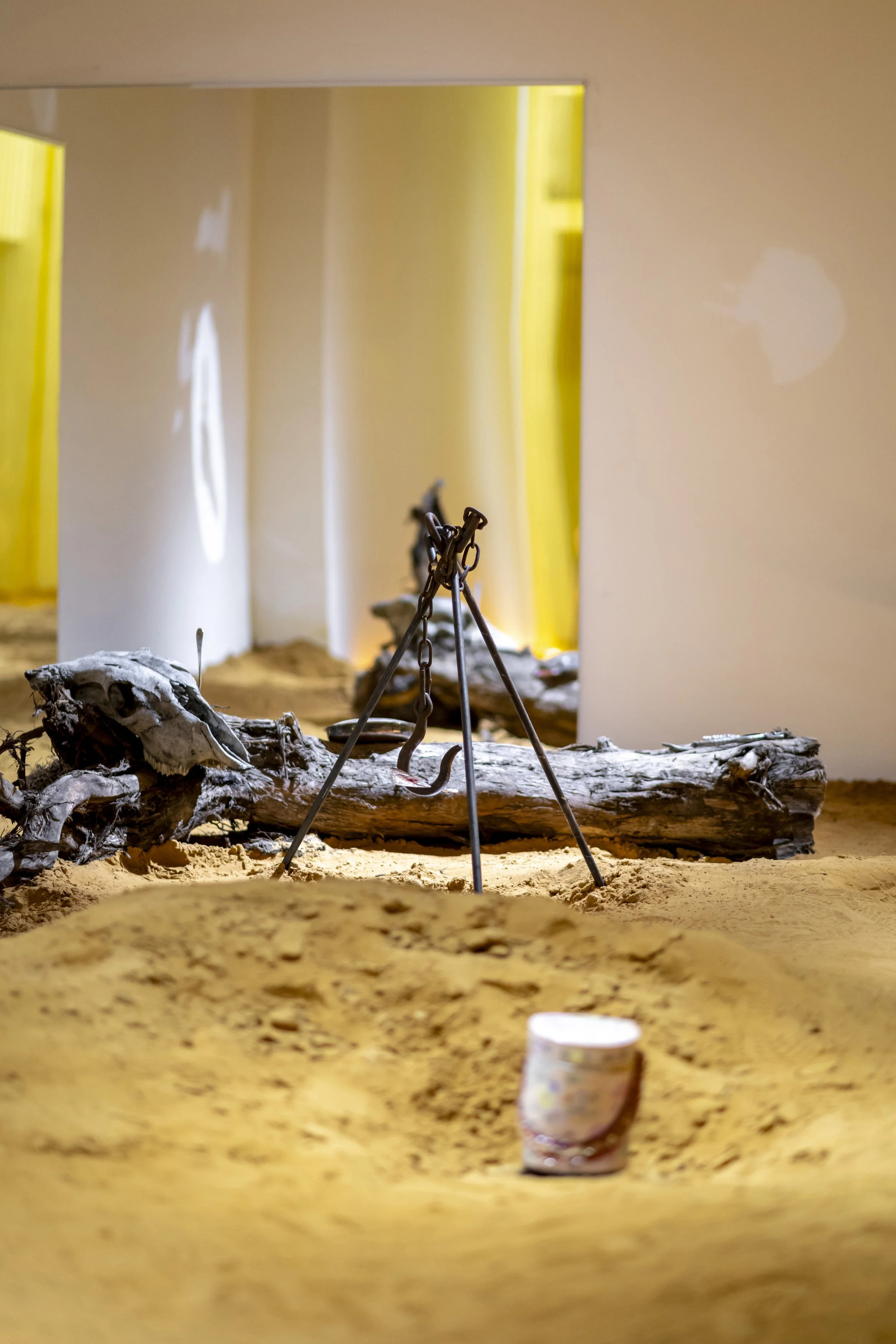
“El Crimen” despliega las consecuencias de esta lógica estadounidense bajo la representación de un asesinato. Retomando la imagen clásica del duelo en el viejo oeste, esta sección reconfigura la violencia no como espectáculo, sino como evidencia. No hay disparos: solo armas abandonadas en la arena y humo suspendido en el aire. Los pistoleros arquetípicos del Western son reinterpretados como trabajadores ferroviarios chinos, figuras indispensables para la construcción del Ferrocarril Transcontinental entre 1864 y 1869, pero históricamente excluidos de las narrativas míticas del género cinematográfico.
Este conflicto escenificado implica a los trabajadores chino dentro de la violencia de la expansión hacia el oeste y pone en primer plano una política de reconocimiento profundamente ambigua. Los intentos contemporáneos de incorporar a los trabajadores ferroviarios chinos en la memoria histórica estadounidense corren el riesgo de ser incluidos sin enfrentar su complicidad. Ser reconocido dentro del relato del Western implica también confrontar la presencia en la escena del genocidio de los pueblos indígenas.
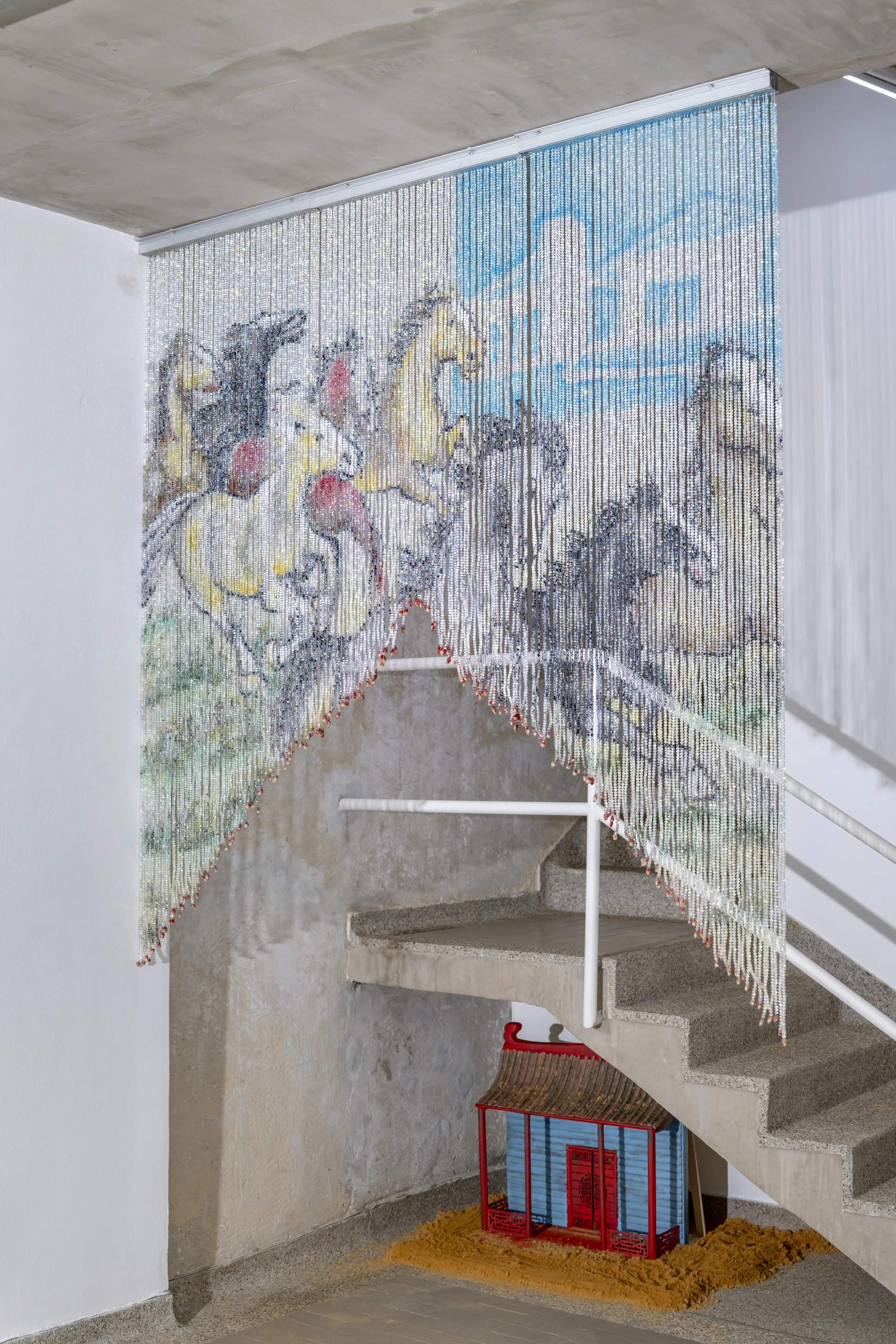
Esta reflexión sobre el ferrocarril establece además un vínculo específico con Bogotá, donde el trabajo y la financiación de China desempeñan un papel central en la construcción del sistema de metro de la ciudad. Los trabajadores migrantes del sur de China en 1860 y las iniciativas laborales chinas contemporáneas quedan así entrelazados a través del tiempo por la construcción de infraestructura ferroviaria en territorios extranjeros.
The Bureau of Osseous Investigation is structured in two parts: “The Setting” and “The Crime.” Together, both examine the Western not only as a cinematic genre, but as a fundamental narrative technology for the execution of the territorial expansion of the United States.
“The Setting” investigates the production of the American myth of the West as a form of rehearsal for conquest. Since the formulation of Manifest Destiny in the mid-nineteenth century, U.S. expansion has depended on narrative and scenic devices that naturalize territorial domination and violence. The Western condenses this logic into heroic dramatizations, in which spaces become transitory and all territory is conceived as frontier.
“The Crime” unfolds the consequences of this American logic through the representation of a murder. Returning to the classic image of the duel in the Old West, this section reconfigures violence not as spectacle, but as evidence. There are no gunshots: only weapons abandoned in the sand and smoke suspended in the air. The archetypal Western gunmen are reinterpreted as Chinese railroad workers, indispensable figures in the construction of the Transcontinental Railroad between 1864 and 1869, yet historically excluded from the mythic narratives of the cinematic genre.
This staged conflict implicates Chinese workers within the violence of westward expansion and foregrounds a deeply ambiguous politics of recognition. Contemporary attempts to incorporate Chinese railroad workers into U.S. historical memory risk including them without confronting their complicity. To be recognized within the Western narrative also entails confronting their presence on the scene of the genocide of Indigenous peoples.
This reflection on the railroad also establishes a specific link to Bogotá, where Chinese labor and financing play a central role in the construction of the city’s metro system. Migrant workers from southern China in the 1860s and contemporary Chinese labor initiatives thus become intertwined across time through the building of railway infrastructure in foreign territories.