
Tejedoras
David Julián Cortés (b. 1998)
Hace varios años David Julián empezó a acercarse al tejido desde su propia pintura. Aparecieron las retículas, los cruces, las franjas, el yute, el costal y el gobelino. Después llegó el esparto y con él una pregunta que ha seguido atravesando su trabajo: entender qué podía tomar la pintura del tejido y qué podía ocurrir cuando esos dos lenguajes empezaban a encontrarse.
En Cerinza, Boyacá, David se acercó a Marlen Reyes y Cecilia Álvarez, tejedoras que han dedicado buena parte de sus vidas al trabajo con el esparto. Aprendió a tejer, pero pronto entendió que lo que más le interesaba no era necesariamente producir cestería, sino observar cómo se construye: la repetición de los movimientos, la relación de las manos con la fibra, el tiempo que exige cada pieza y la manera en que ese conocimiento permanece ligado a las personas que lo practican.
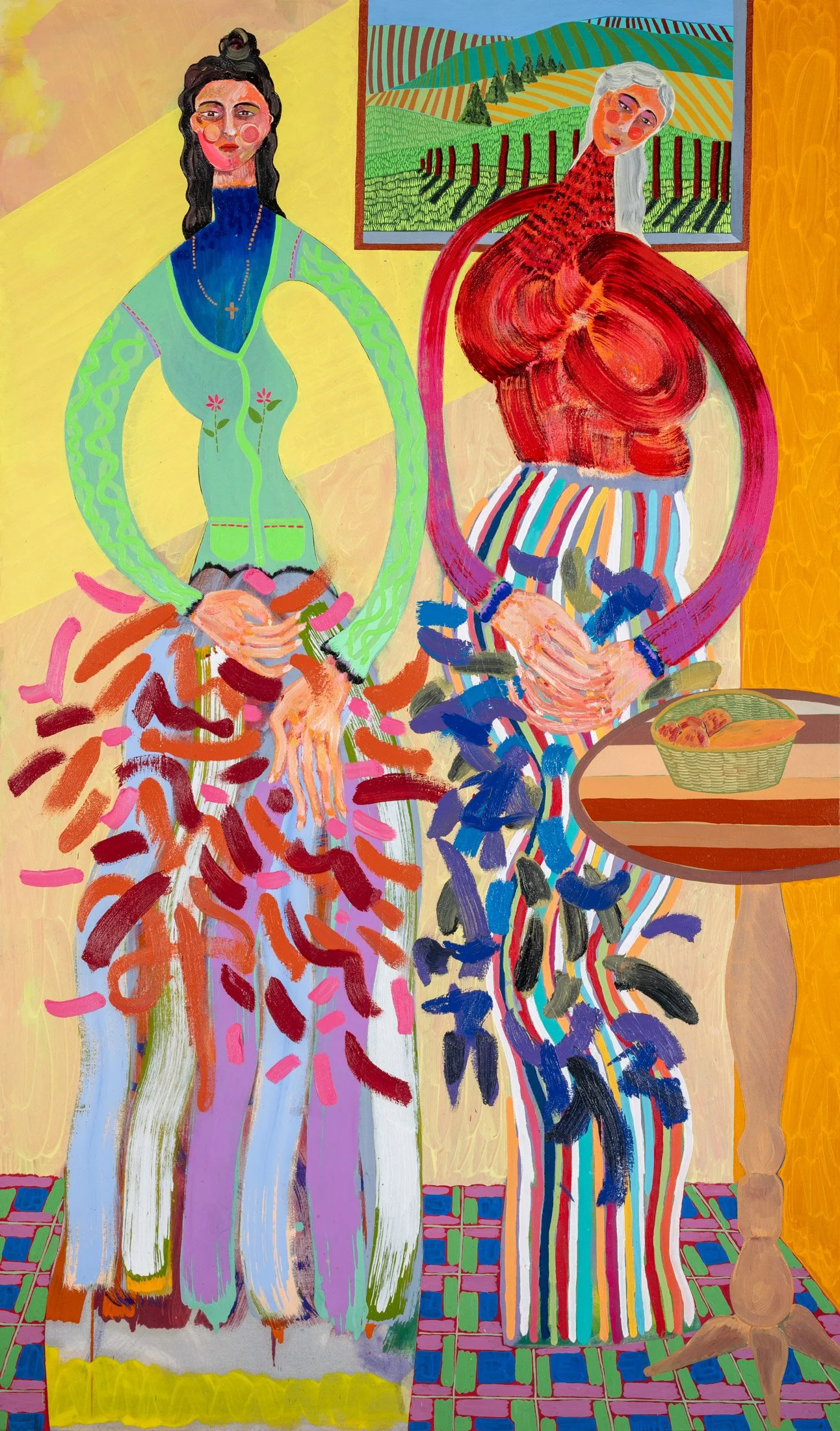
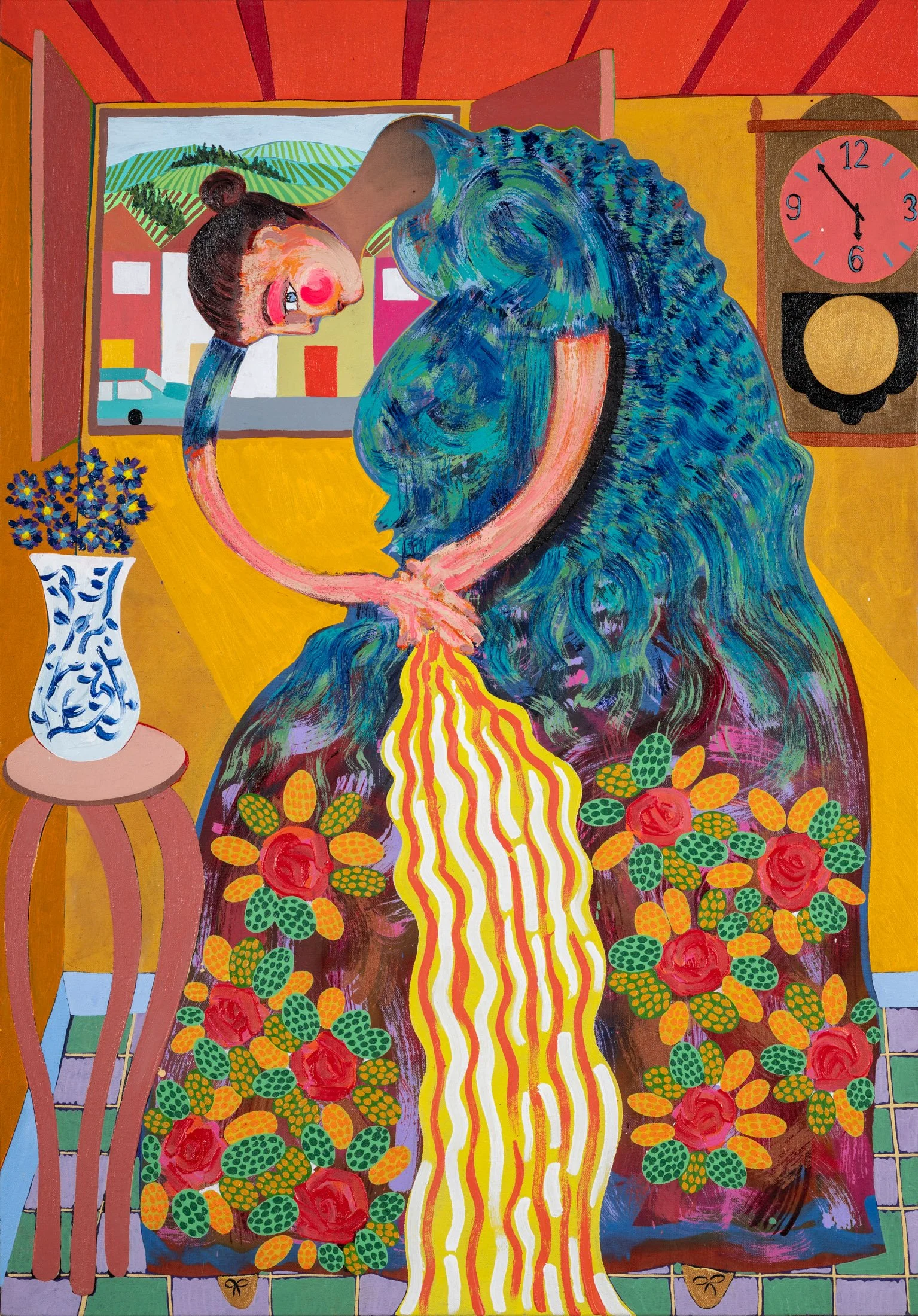
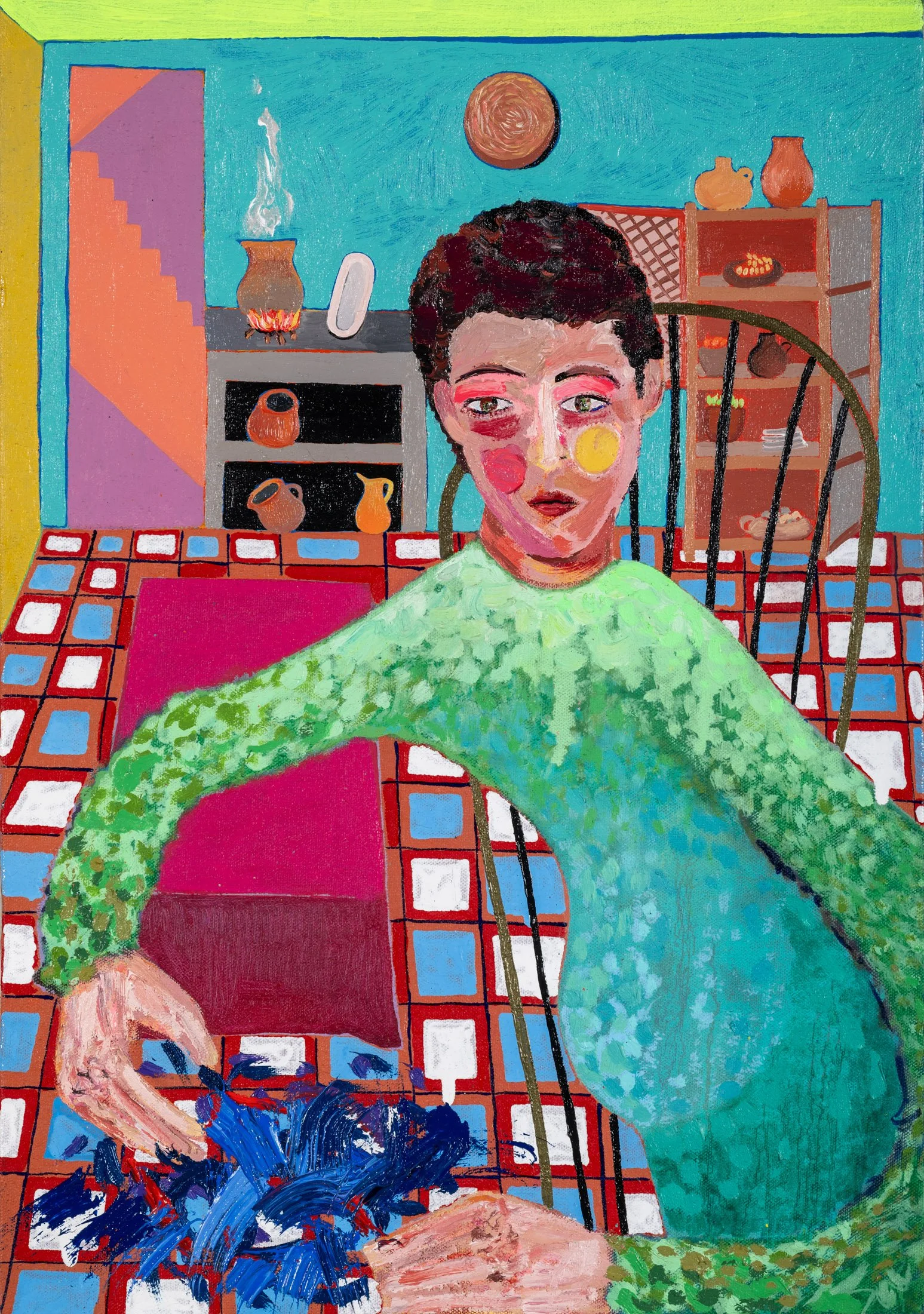
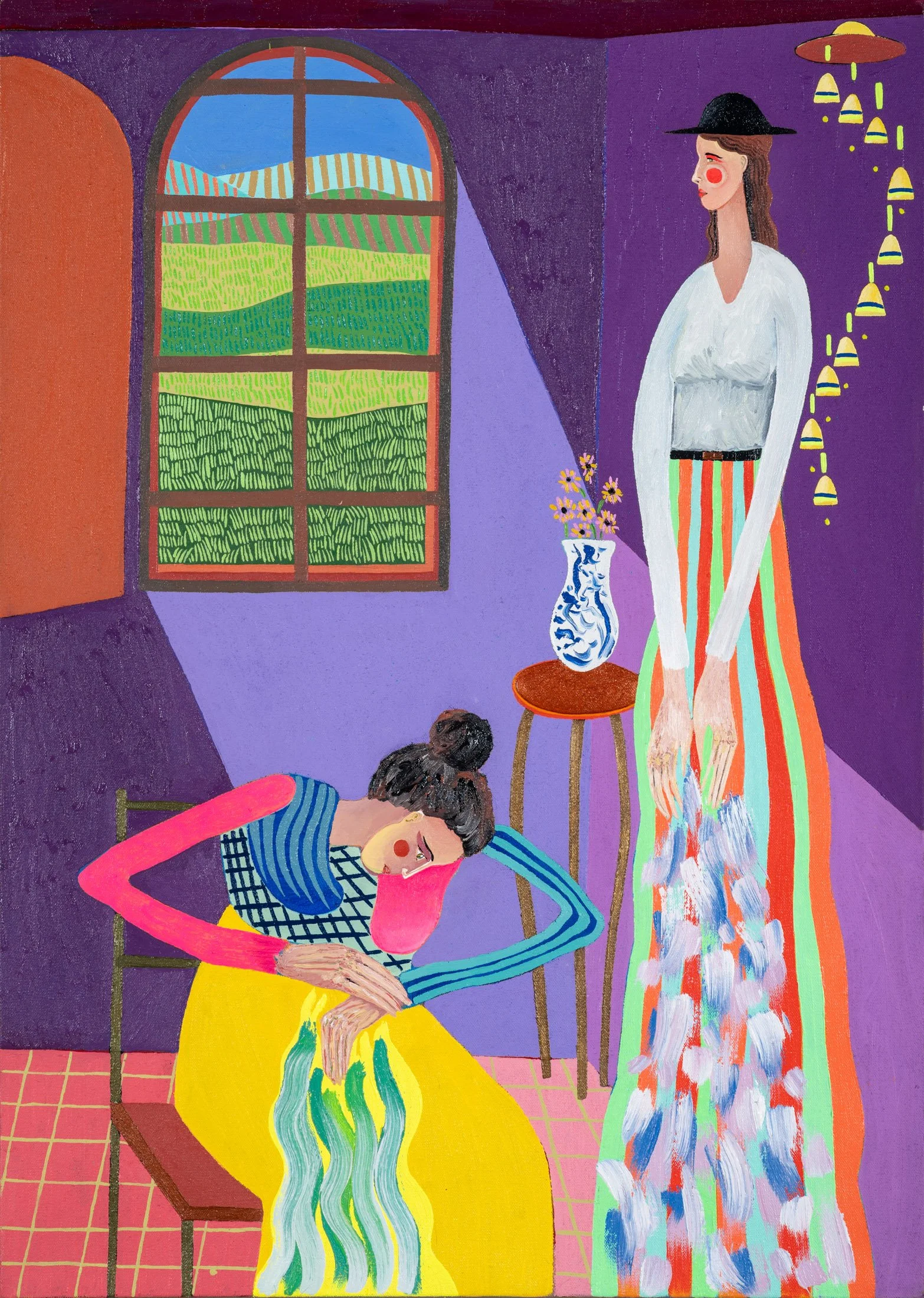
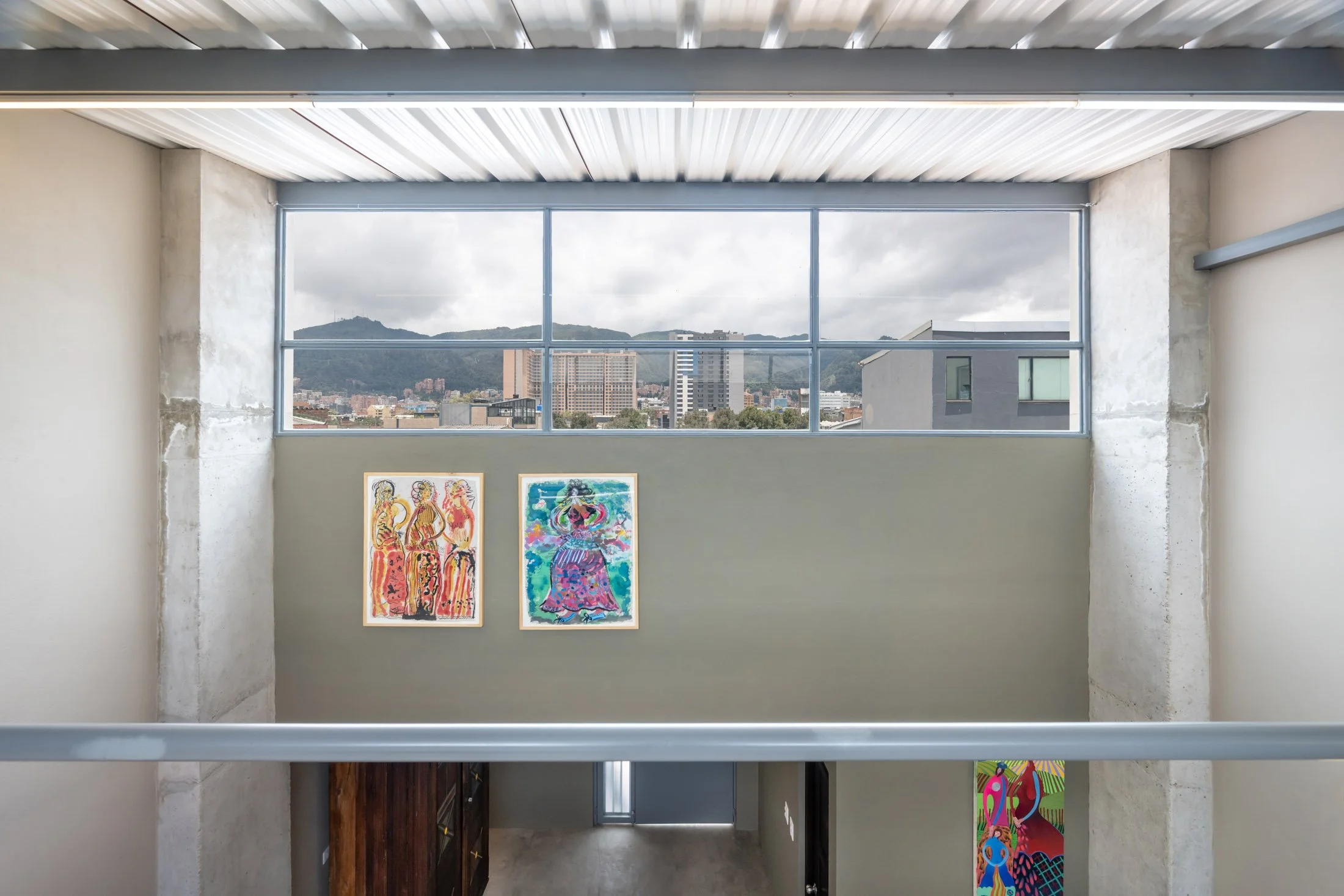
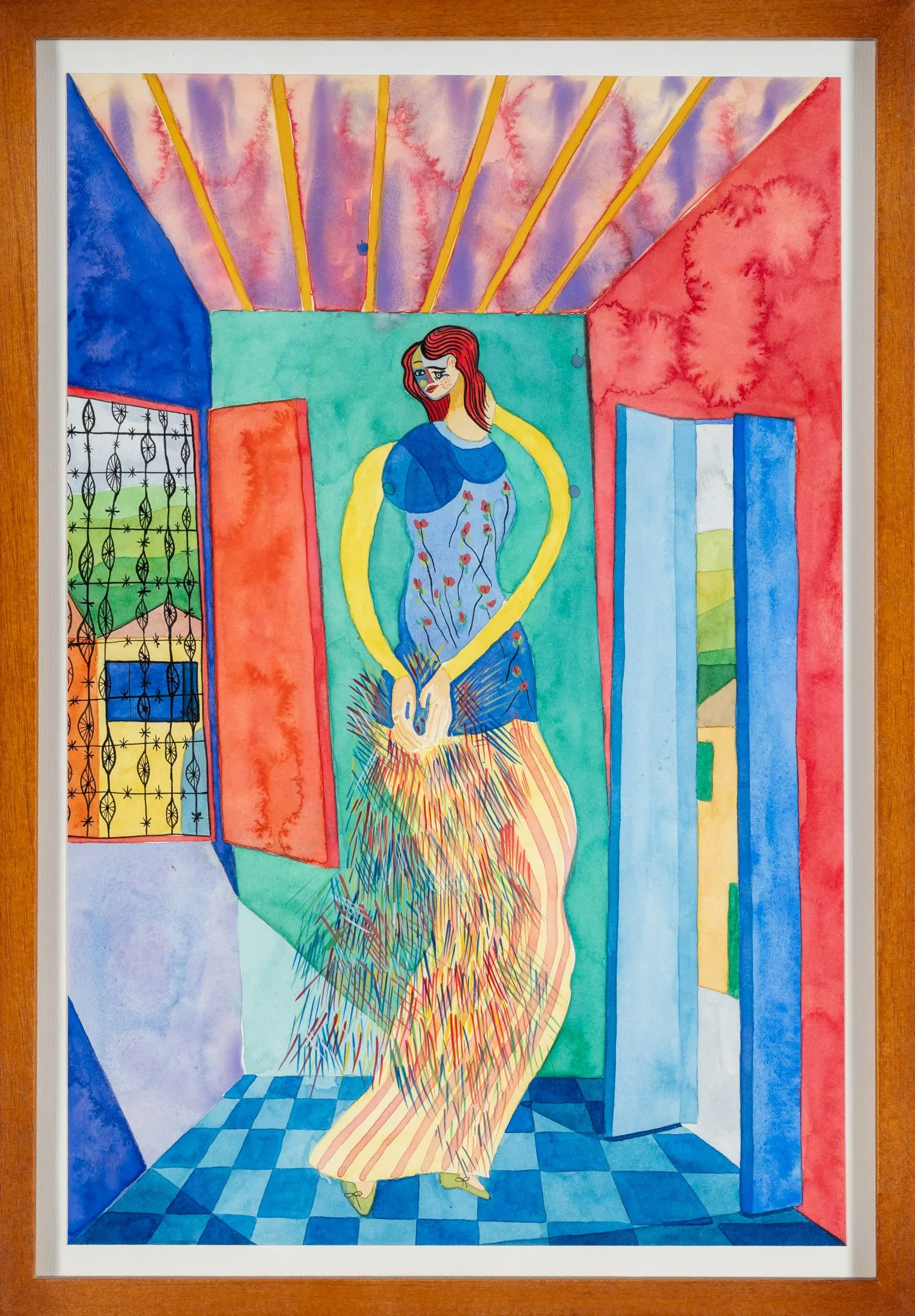
De ahí salen buena parte de las imágenes de esta exposición. Hay cuerpos encorvados por los años y el oficio, manos que se agrandan, brazos que se estiran, vestidos, interiores de casas y fragmentos del paisaje de Boyacá. David altera las proporciones y las perspectivas porque no parece interesado en describir exactamente lo que tiene enfrente. Más bien utiliza esos cuerpos y esos espacios para seguir pensando en líneas, ritmos, repeticiones y estructuras. A veces una fibra termina pareciéndose a una pincelada y una pincelada a una fibra.
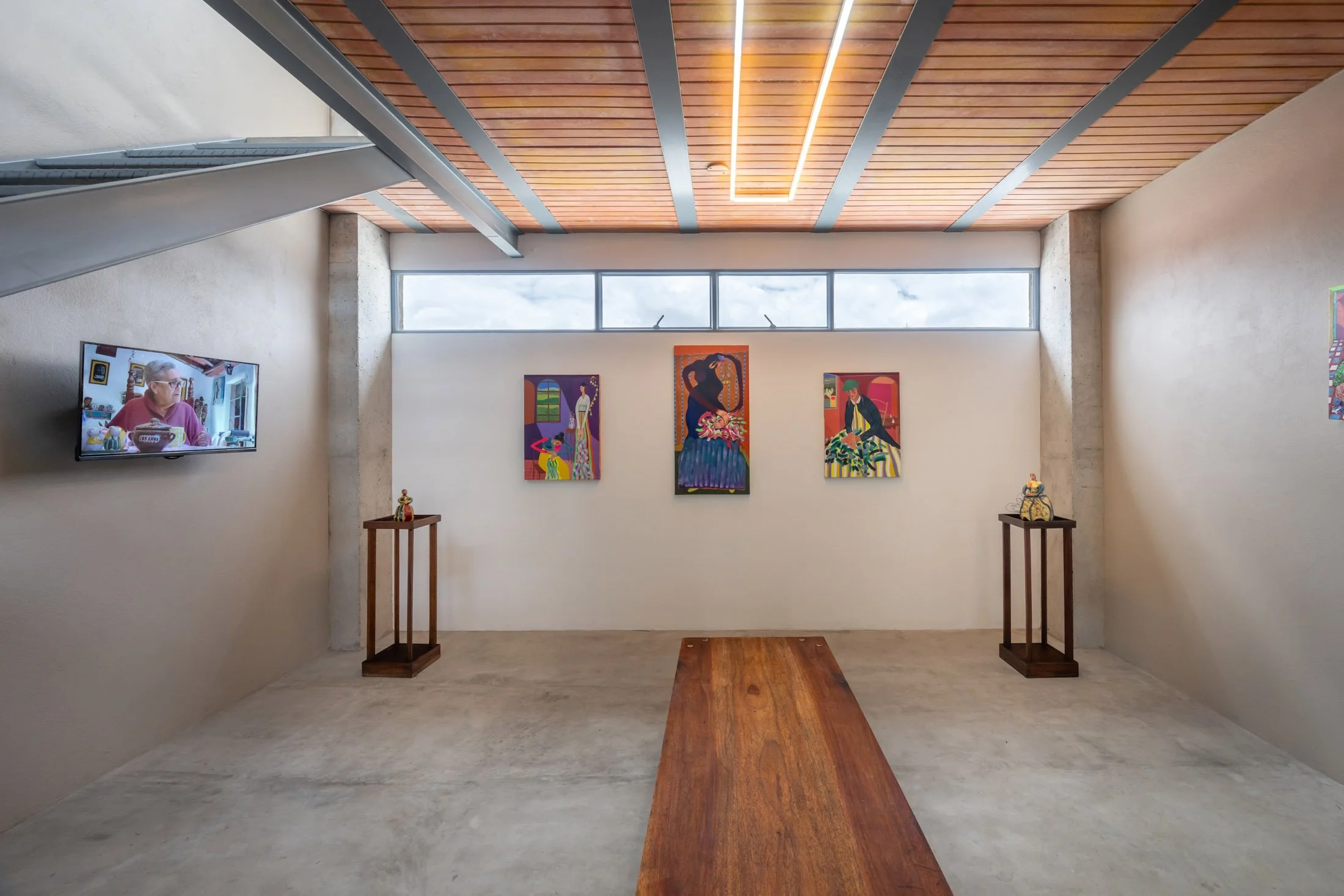
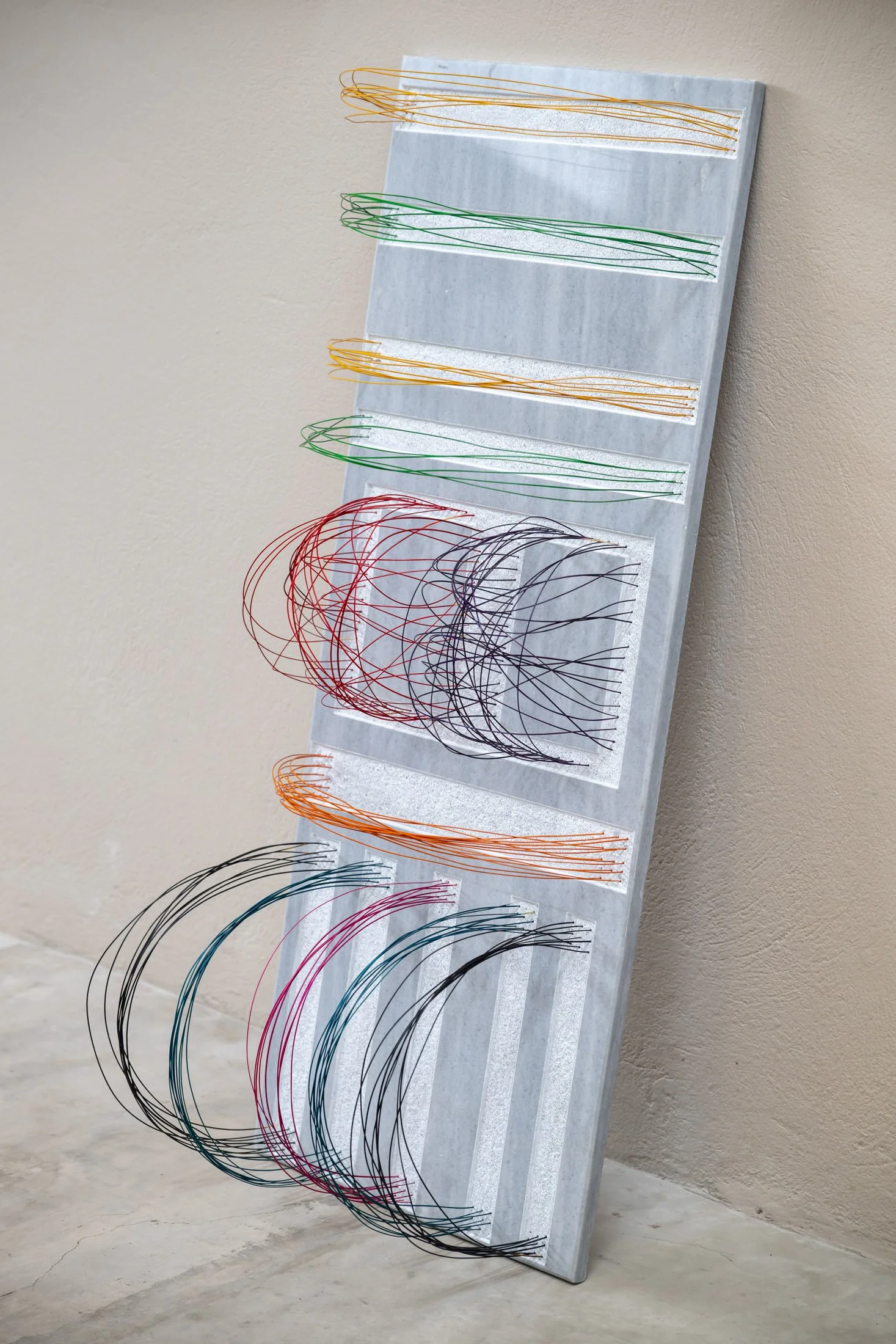
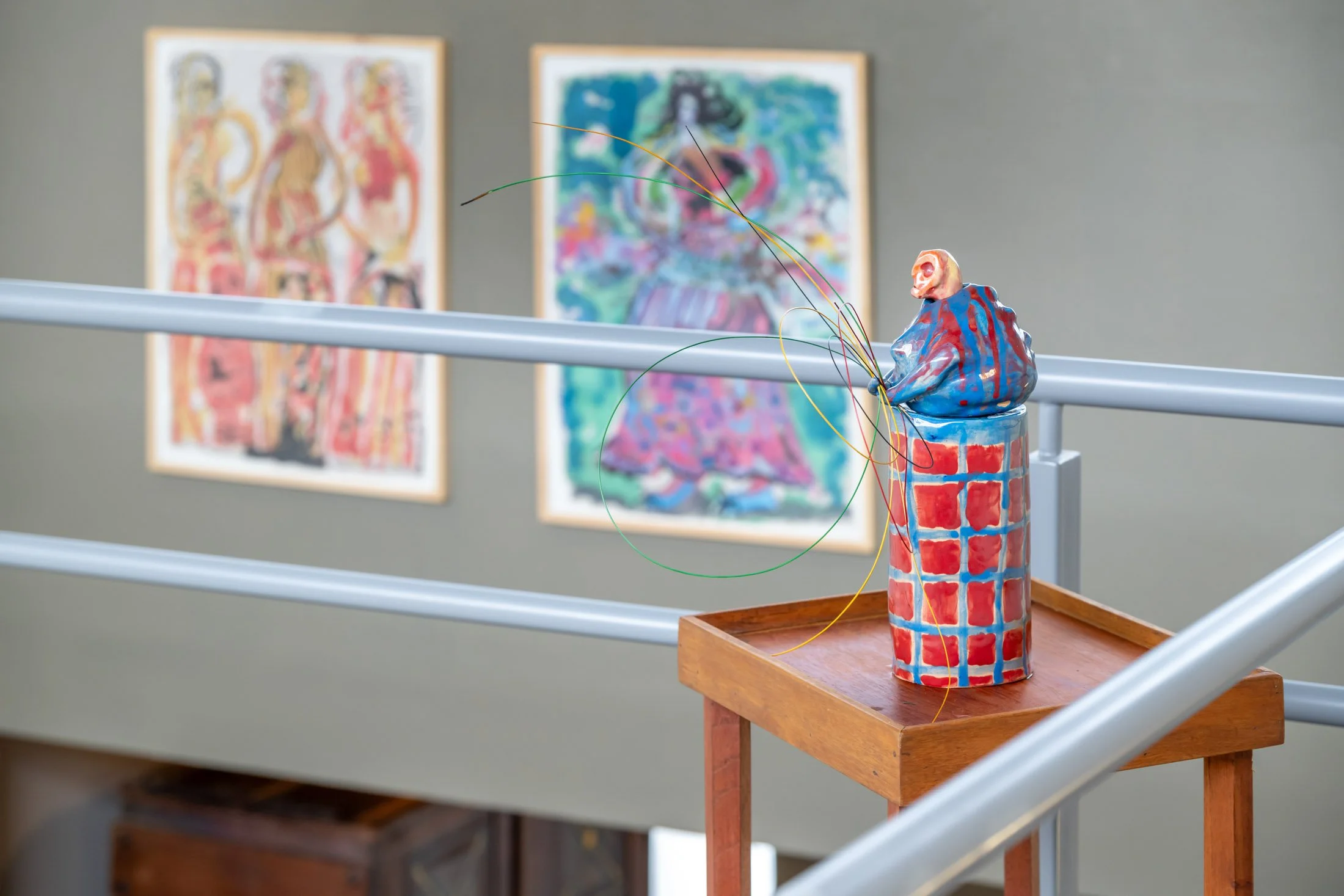
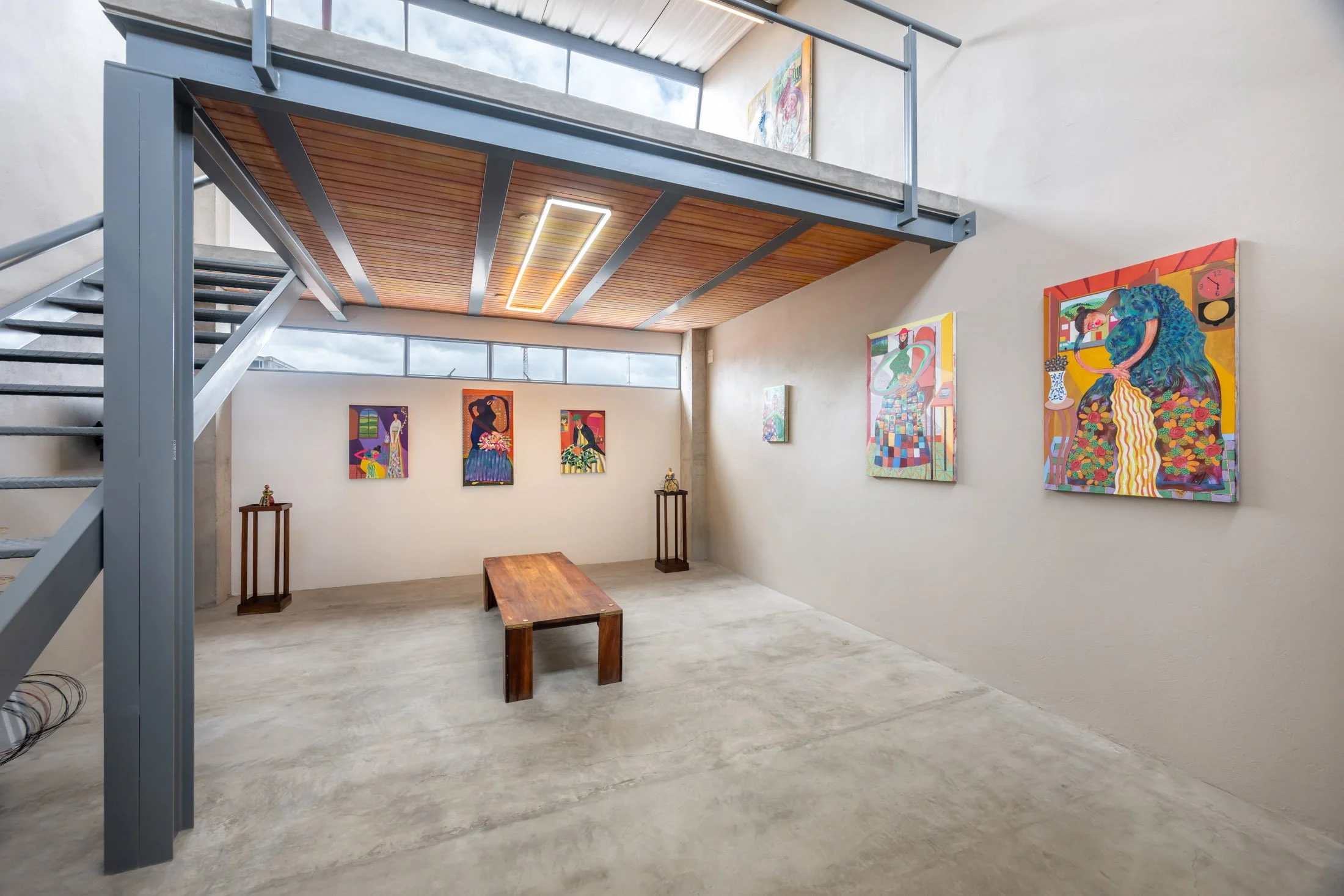
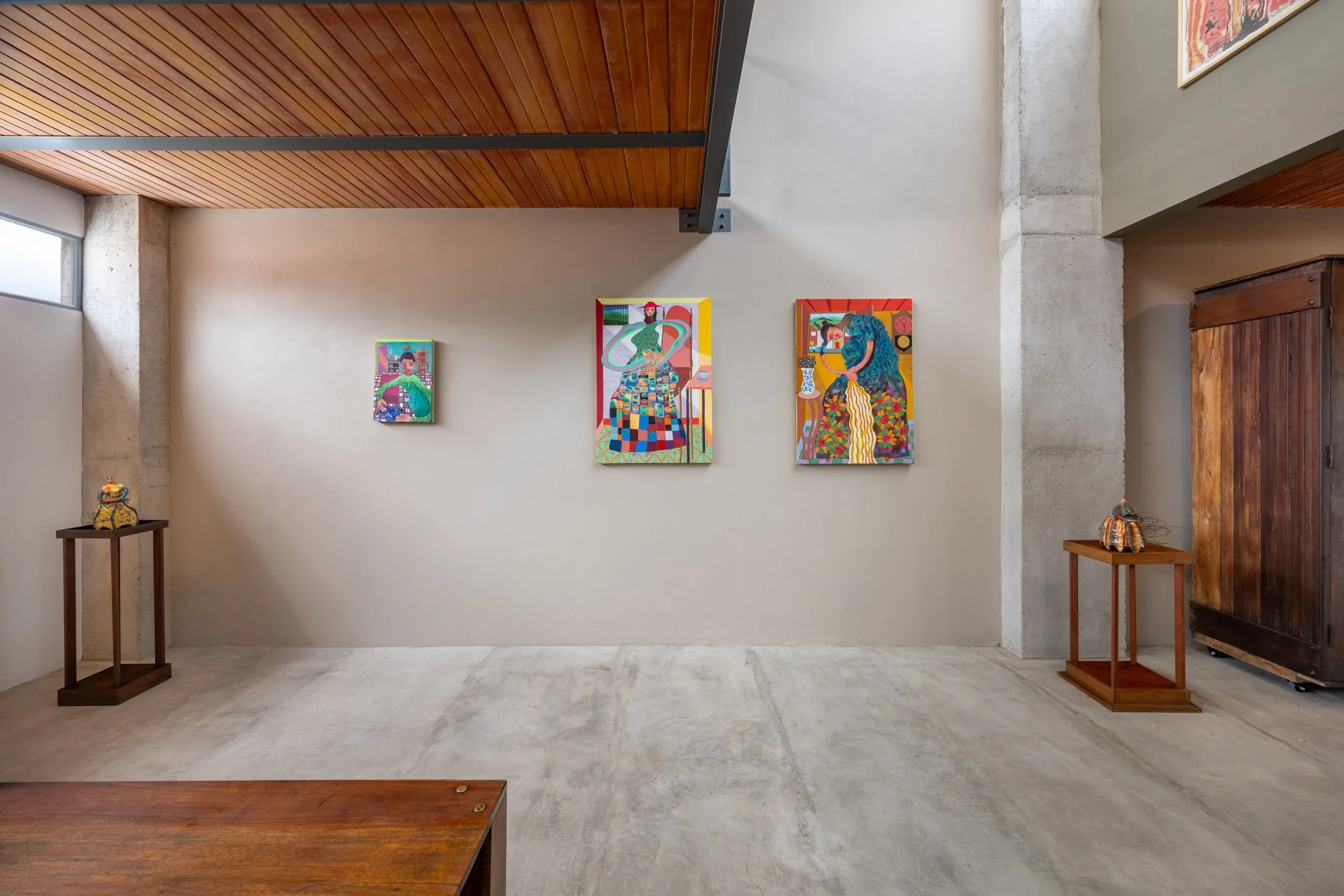
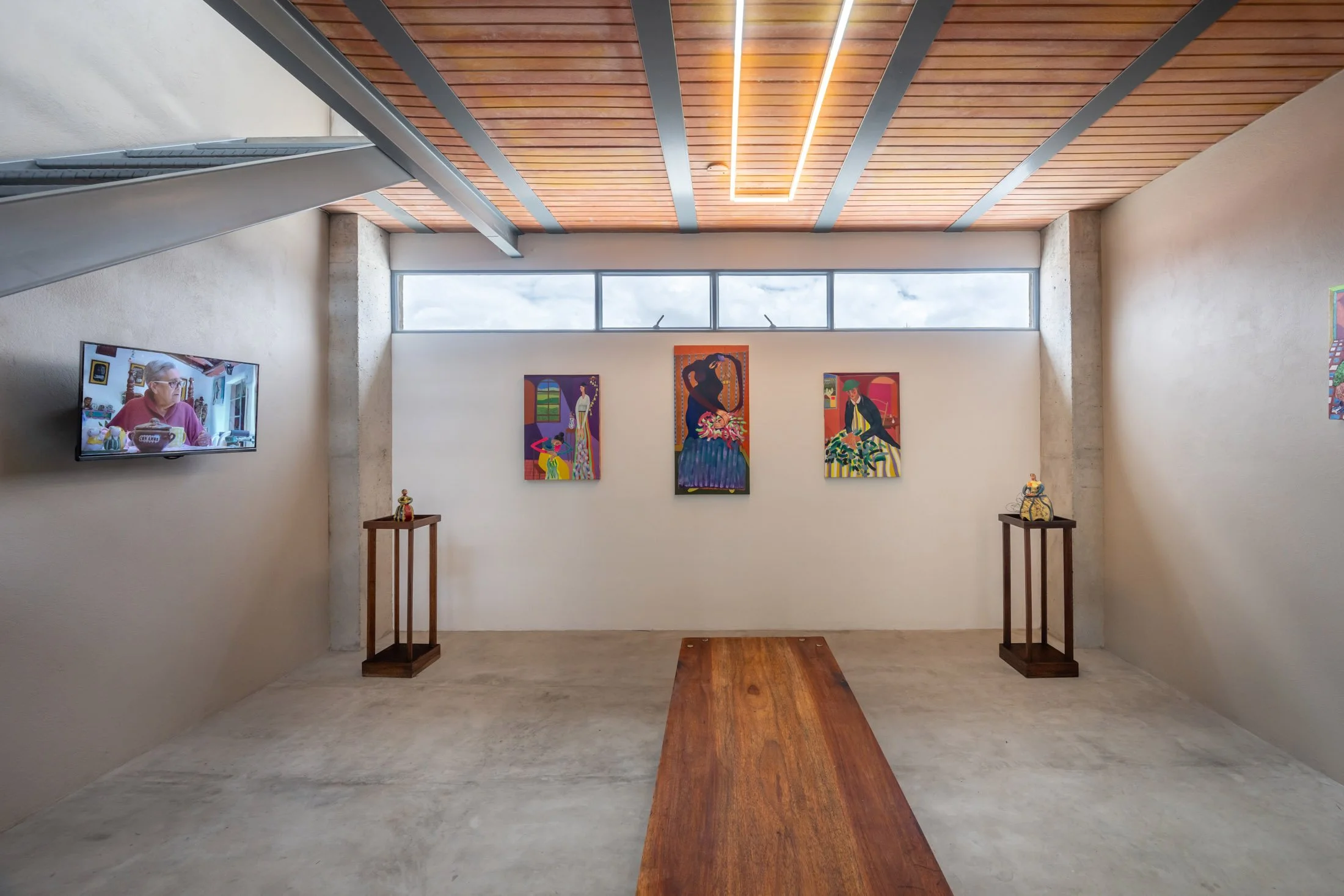
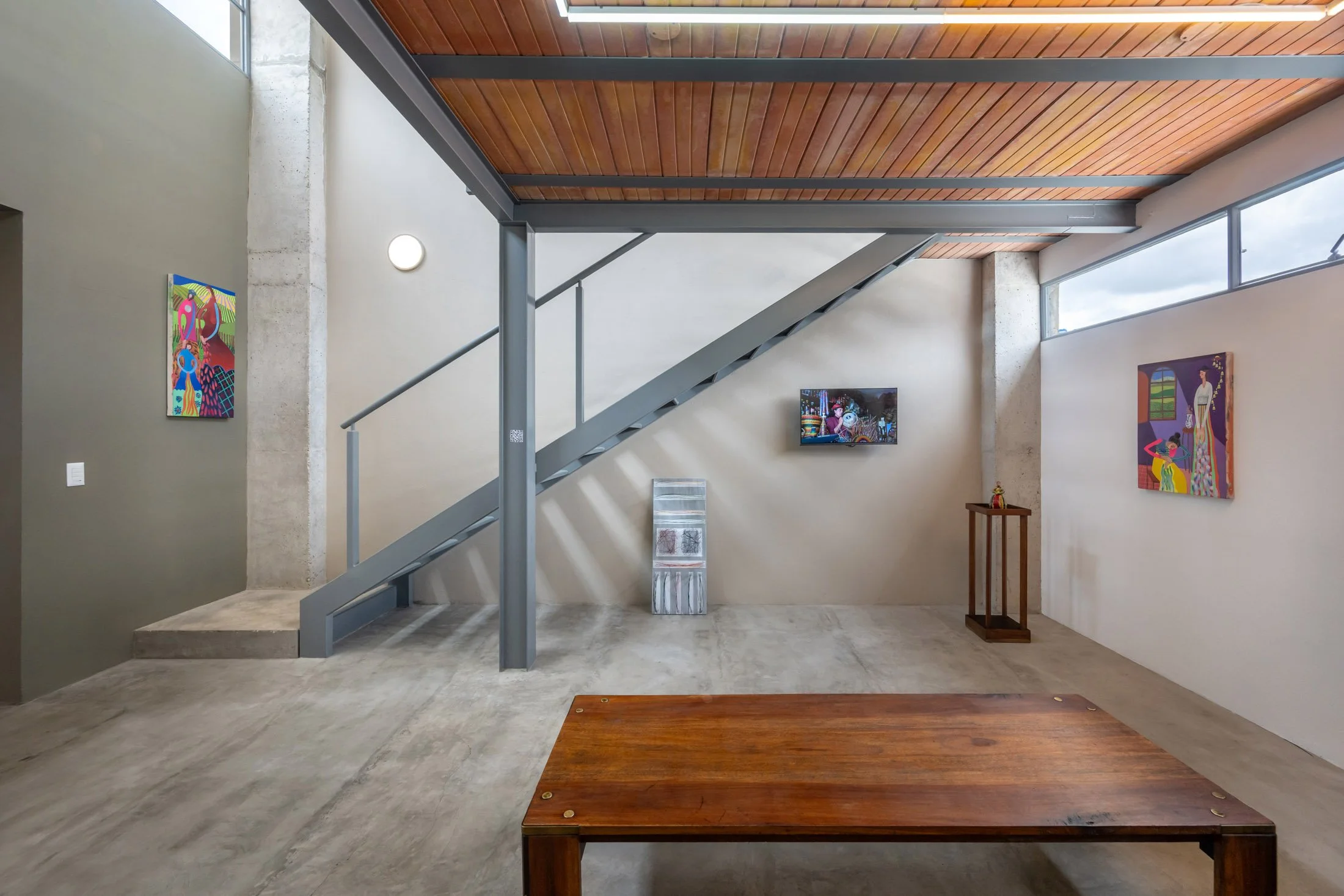
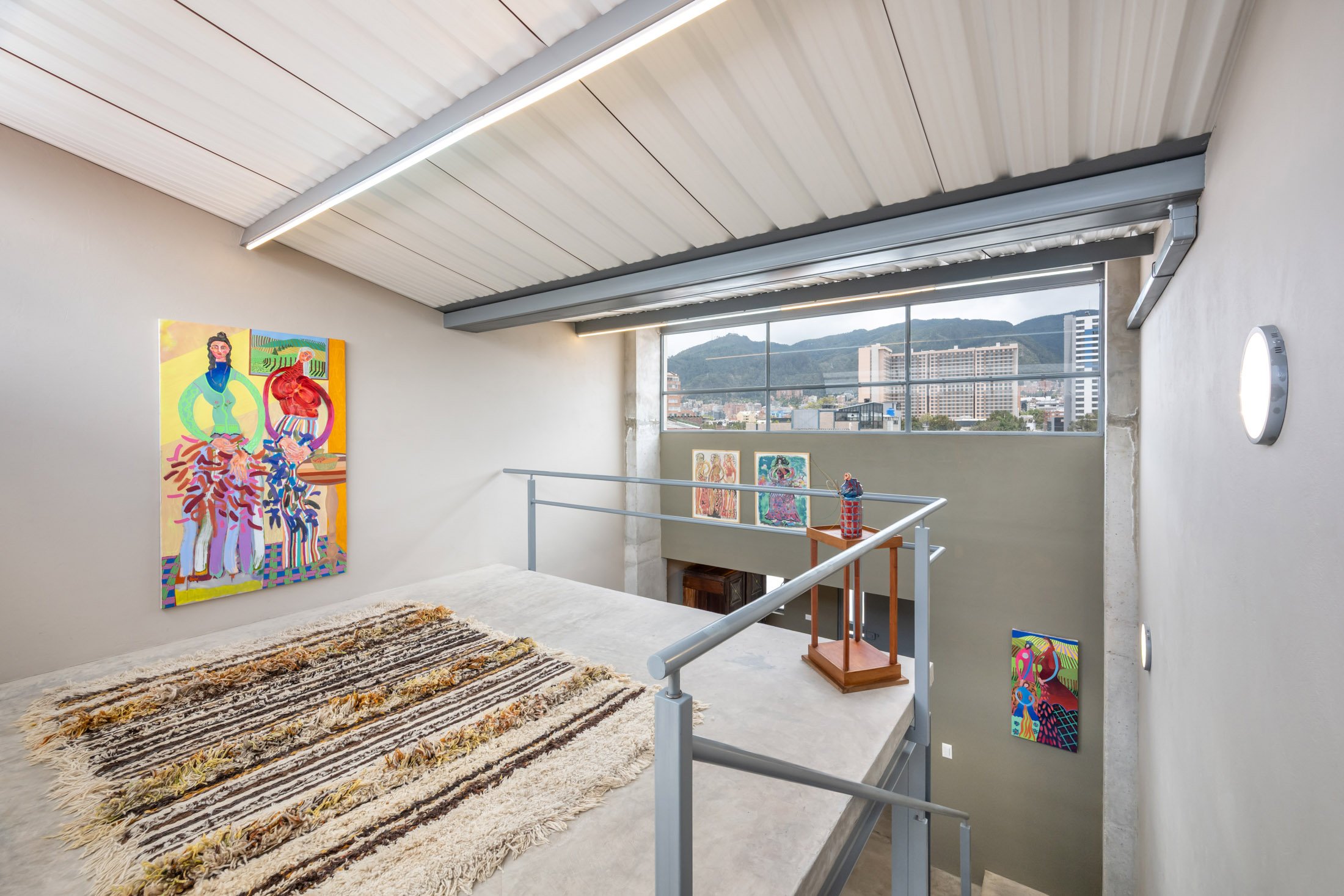
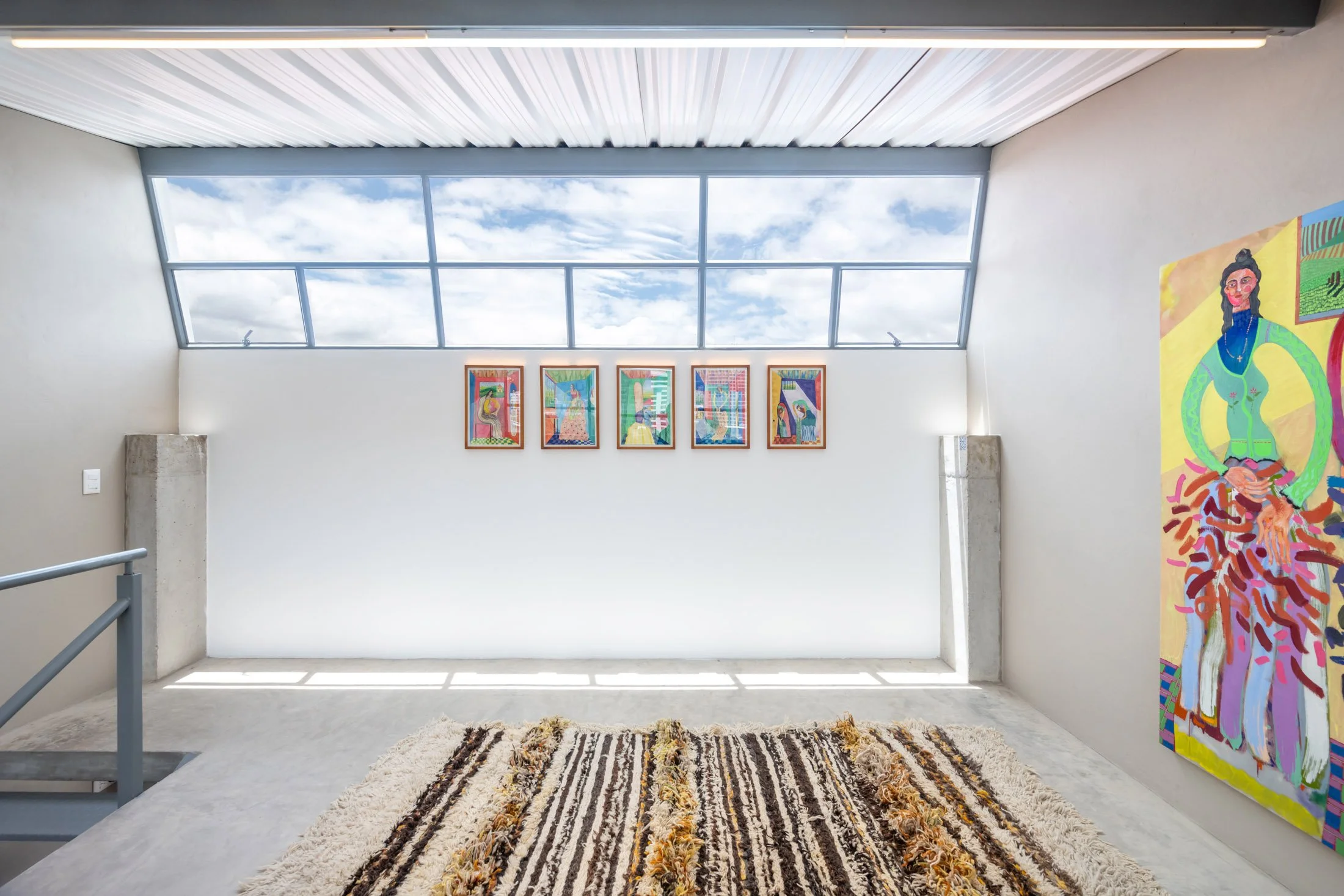
Aunque la mayor parte de Tejedoras es pintura, la exposición incluye también acuarelas, cerámicas y un documental construido a partir de conversaciones con Marlen y Cecilia sobre su oficio, sus vidas y Cerinza. En las cerámicas, algunas de las líneas que estaban contenidas en la pintura salen al espacio; en otras piezas, el esparto se encuentra con materiales como el mármol. Son distintas maneras de volver sobre una misma preocupación y de llevar el tejido más allá de su representación.
Tejedoras continúa así una investigación que David Julián viene construyendo entre pintura, tejido y territorio. Pero esta vez el tejido deja de aparecer solamente como estructura, ritmo o abstracción y se encuentra con las vidas concretas de quienes lo practican. En las manos de Marlen y Cecilia es oficio, memoria, economía y conocimiento; en la obra de Cortés se convierte también en una manera de volver a pensar la pintura.
Several years ago, David Julián began approaching weaving through his own painting. Grids, intersections and bands began to appear, along with materials such as jute, burlap and tapestry fabric. Then came esparto grass, and with it a question that has continued to run through his work: what could painting take from weaving, and what might happen when these two languages began to meet?
In Cerinza, Boyacá, David met Marlen Reyes and Cecilia Álvarez, weavers who have devoted much of their lives to working with esparto grass. He learned to weave, but soon realized that what interested him most was not necessarily making baskets, but observing how they are constructed: the repetition of movements, the relationship between hands and fiber, the time each piece requires, and the way this knowledge remains closely tied to the people who practice it.
Many of the images in this exhibition emerge from this experience. There are bodies bent by years and by the demands of the craft, hands that grow larger, arms that stretch, dresses, domestic interiors and fragments of the Boyacá landscape. David alters proportions and perspectives because he seems less interested in describing exactly what is in front of him than in using these bodies and spaces to continue thinking through lines, rhythms, repetitions and structures. At times, a fiber begins to resemble a brushstroke, and a brushstroke a fiber.
Although Tejedoras consists primarily of paintings, the exhibition also includes watercolors, ceramics and a documentary built around conversations with Marlen and Cecilia about their craft, their lives and Cerinza. In the ceramic works, some of the lines previously contained within the paintings extend into space; in other pieces, esparto grass comes into contact with materials such as marble. These are different ways of returning to the same concern and of taking weaving beyond its representation.
Tejedoras thus continues an ongoing investigation that David Julián has been developing across painting, weaving and territory. This time, however, weaving no longer appears solely as structure, rhythm or abstraction, but encounters the lived realities of those who practice it. In the hands of Marlen and Cecilia, it is craft, memory, livelihood and knowledge; in Cortés’s work, it also becomes a way of rethinking painting.